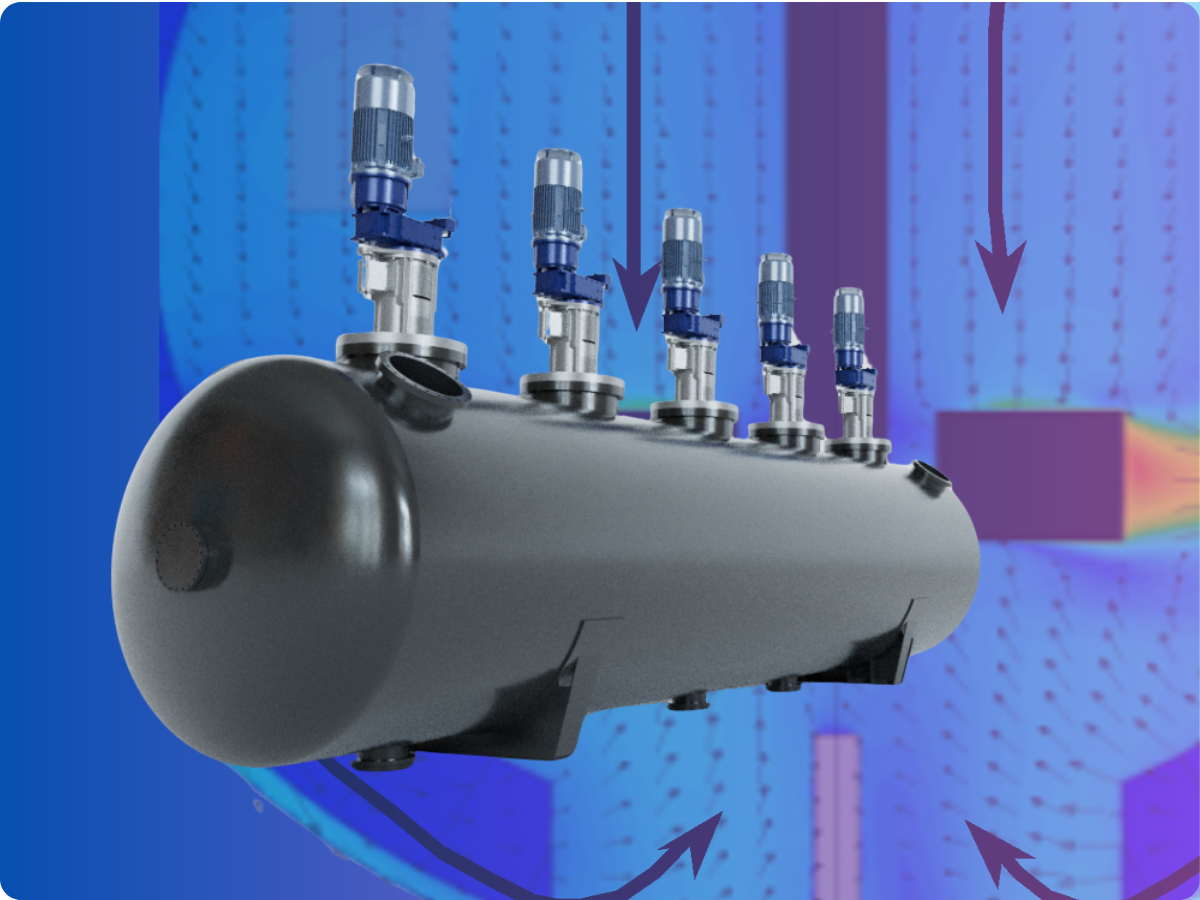
HPAL-high pressure acid leaching
Specific highlights
- In the hydrometallurgical leaching process for zinc extraction, crushed zinc ore, often zinc sulphide, is mixed with diluted sulphuric acid in an agitated reactor.
- The agitators and mixers ensure thorough mixing of the ore-acid suspension to ensure an optimal reaction in which zinc goes into solution as zinc sulphate.
- After leaching, the zinc sulphate solution is separated from the solids.
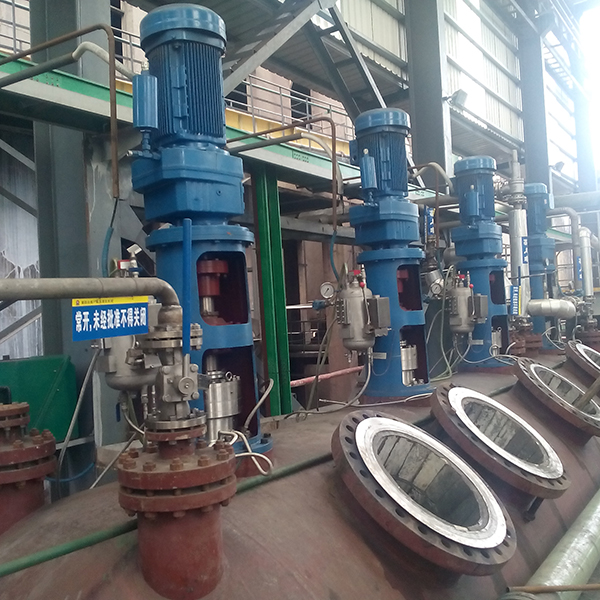
SK500 agitator Series
- The SK500 agitator Series is built for heavy-duty mixing tasks, including high-pressure acid leach (HPAL) and autoclave applications in mining, as well as medium to large reactors in the chemical industry.
- Whether for the petrochemical, refinery, or specialty chemicals sectors, the SUNKAIER SK500 Series is engineered for optimal performance, safety and compliance.

Chemical
- FeOOH(s) + 3H+(aq) = Fe3+(aq) + 2H2O(aq)
- AlOOH(s) + 3H+(aq) = Al3+(aq) + 2H2O(aq)
- NiO(s) + 2H+(aq) = Ni2+(aq) + H2O(aq)
- CoO(s) + 2H+(aq) = Co2+(aq) + H2O(aq)
- 2Fe3+(aq) + 3H2O(aq) = Fe2O3(s) + 6H+(aq)
- Fe3+(aq) + SO42- + H2O(aq) = FeOHSO4(s) + H+(aq)
- 2FeOHSO4(s) + H2O(aq) = Fe2O3(s) + 2SO42- + 4H+(aq)
- 3Al3+(aq) + 2SO42- + 7H2O(aq) = (H3O)Al3(SO4)2(OH)6(s) + 5H+(aq)
- Al3+(aq) + SO42- + H2O(aq) = AlOHSO4(s) + H+(aq)
Iron (in the trivalent state) and aluminum follow a dissolution-precipitation path, forming solid products. Iron in the form of goethite (α FeOOH) and aluminum in the form of boehmite (AlOOH) dissolve initially to soluble ferric and aluminum sulfates respectively, according to equations (1) and (2). Gibbsite (Al(OH)3), the major aluminium phase in the limonite ore, is transformed to boehmite at around 135-155°C. Nickel and cobalt in the assumed form of oxides, dissolve according to the reactions (3) and (4) respectively and remain in the aqueous phase as sulfates.
Ferric cations hydrolyze after the dissolution of goethite, forming hematite or basic ferric sulfate, as indicated by the reaction (5) and (6). Basic ferric sulfates transform to hematite (7). Basic ferric sulfates formation depends on leaching conditions and it is favored by highly acidic environment. Higher temperature, on the other hand, favors the formation of hematite.
These reactions regenerate the acid consumed by goethite dissolution, which is one of the important advantages of the HPAL process. Aluminum cations also hydrolyze, leading to the formation of solid products. Again, most of the acid consumed by boehmite dissolution is regenerated, as shown in equations (8) and (9). The autoclave product is a hot slurry, typically at 20-25% solids, containing typically 4-6 g/l nickel, 30-60 g/l sulfuric acid, <8 g/l iron and <3 g/l aluminum.
principle
Operational Parameters and Processing Steps
The HPAL process begins with ore crushing and screening, where operators evaluate potential beneficiation through silica fraction separation. The beneficiated product enters titanium-lined autoclaves for sulfuric acid leaching at temperatures between 240-270°C, generating equilibrium vapor pressures of 33-35 atm. Key operational parameters include:
- Pulp density: 25-35% solids
- Residence time: 30-90 minutes
- Temperature range: 246-270°C
- Acid consumption: 200-520 kg/t per dry ore
- Pressure: 3800-5400 kPa
Related industries
Explore industries related to this category.