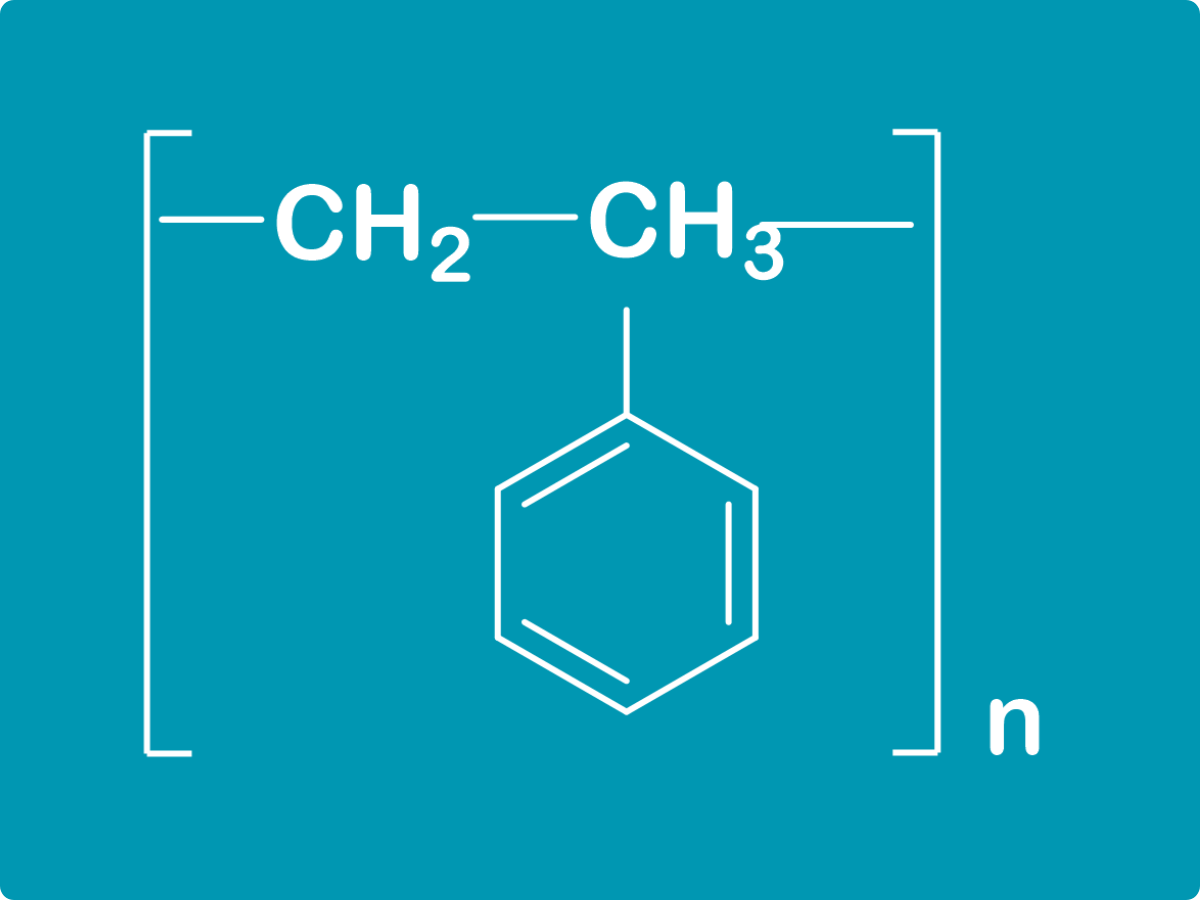
Polystyrene
Chemical
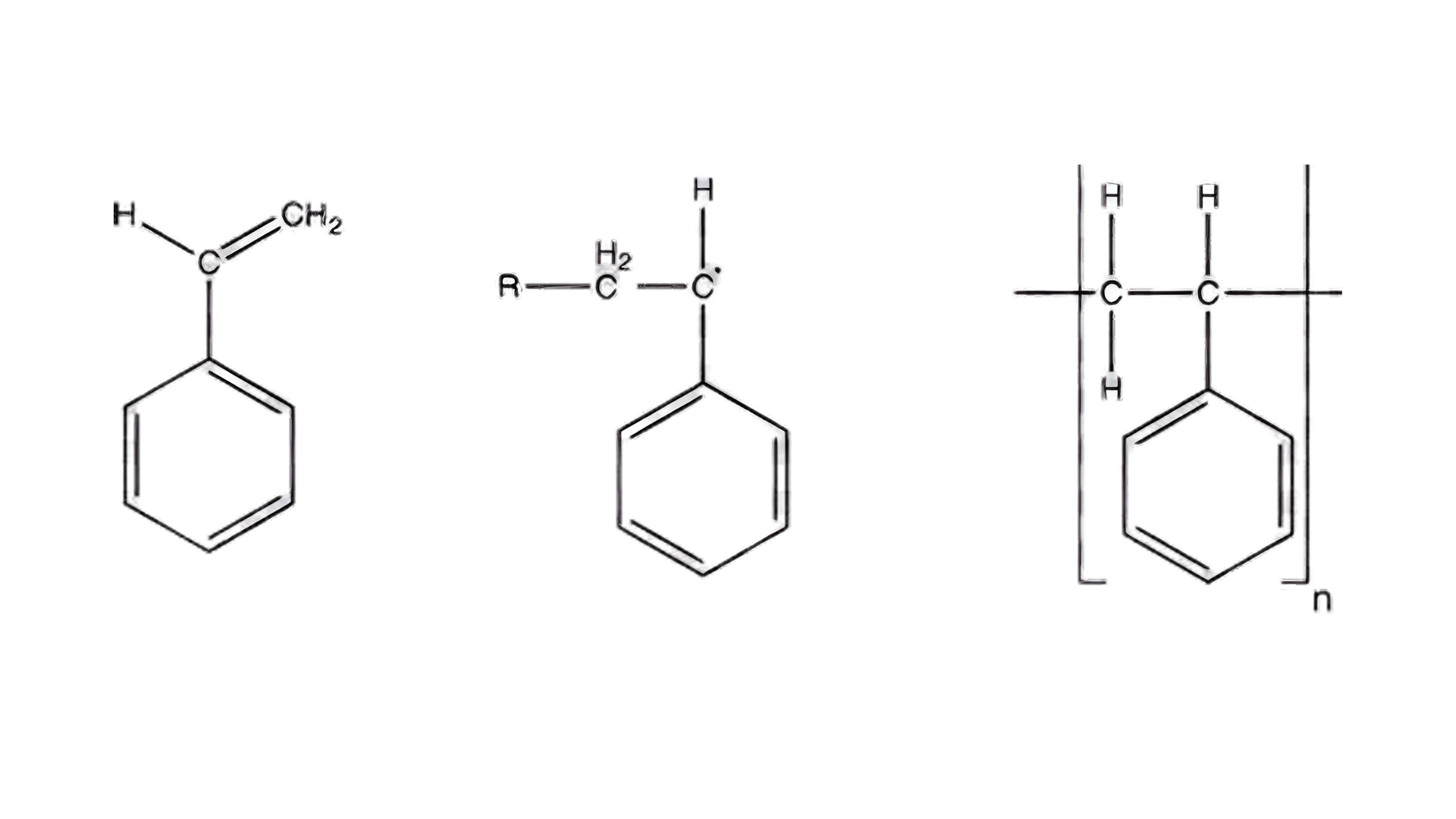
Styrene is polymerized by a free-radical polymerisation mechanism. In this polymerization process the initiator benzoyl peroxide decomposes at 80-90C with the cleavage Oxygen-Oxygen bond to give two benzoyloxy radicals, which then losses carbondioxide to form two benzyl radicals;
Technical data
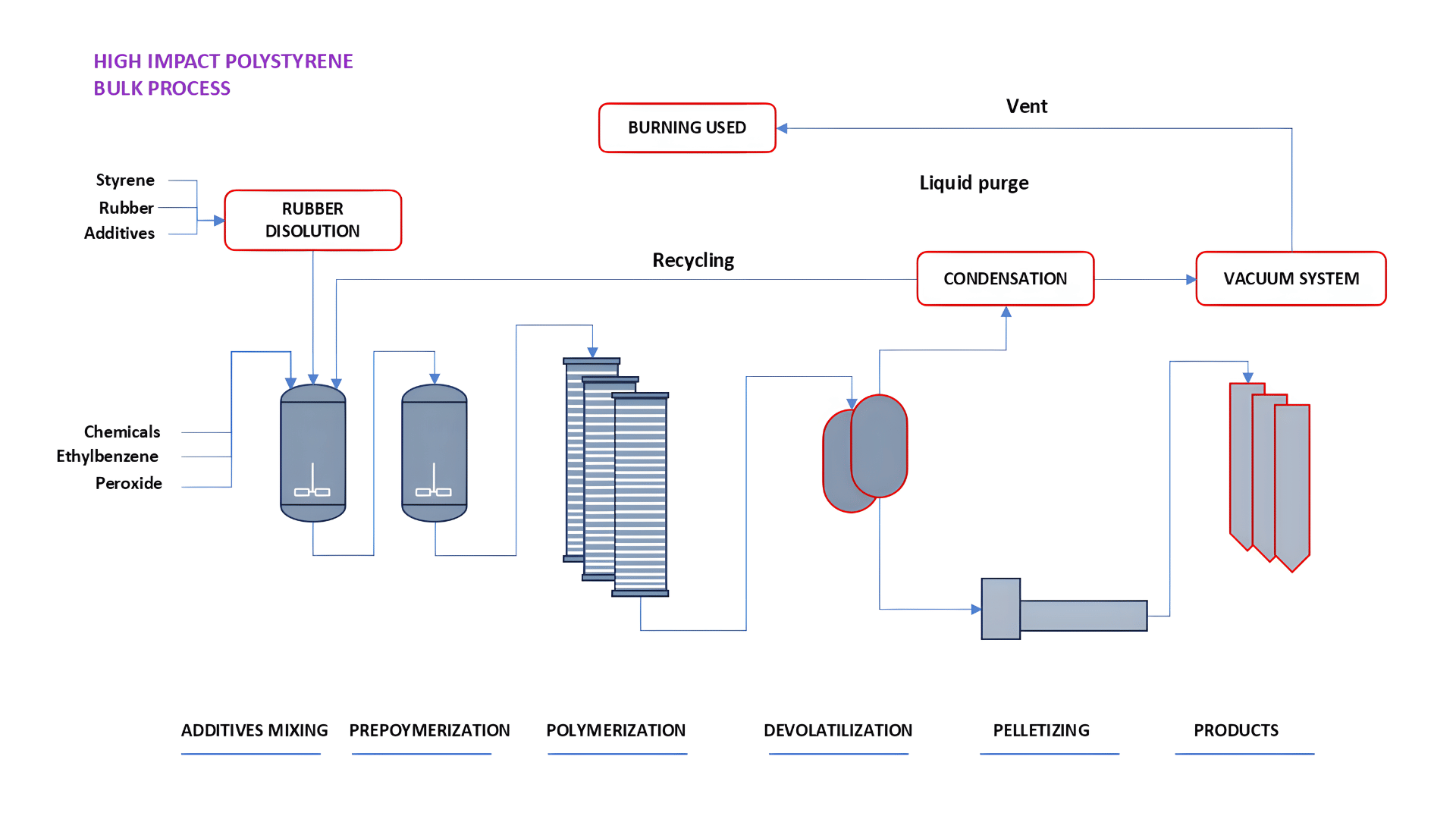
SUNKAIER HIPS technology is based on a continuous mass peroxide-initiated polymerization of styrene in a rubber-styrene solution. Rubber, after being ground in a mill, is dissolved in styrene in a proper section and then added with chemicals and peroxide in a mixing section. The mass reaction occurs in the presence of solvent. This mixture is thus fed to the polymerization section, generally composed by a sequence of two/three plug-flow reactors; the reaction thermal profile is controlled by thermal oil circulating inside internal coils. The whole reaction section arrangement is selected case-by-case, in order to meet specific requirements. At the end of the reaction train, the polymer solution is sent to a devolatilization section, operated in two stages in series under vacuum conditions. The monomer and low-boiling compounds are removed from the polymer, which is finally sent to the pelletizing unit. The heat is provided by a thermal
oil system. The vapour mixture, recovered by the devolatilization section, is condensed and then continuously recycled
to the mixing section. Non-condensed vapours/inert gases from the vacuum system and liquid organic purge from the condensation section are recovered as fuel in a furnace, where thermal oil for the process is heated
Performance data
Main advantages
Even if the process scheme is similar to the most common current technologies available in the market, the SUNKAIER HIPS technology is unique among the producers, due to the following proprietary advanced design features:
Polymerization section
The main items are full plug-flow reactors (PFRs); thanks to agitation and a high specific thermal exchange surface area, they are characterized by very precise control of the thermal reaction profile. Any specific need in terms of product quality/portfolio can be matched by tuning the reaction train arrangement. In this way, it is possible to achieve maximum control of the morphology of the disperse phase (rubber phase), together with good efficiency of the catalytic grafting reaction. This synergy allows to optimise the balance between production rate and polymer quality.
Devolatilization section
This section involves a two-stage operation, with high heat and mass transfer rates and very low residence times. This combination of factors leads to a very efficient monomer and organic matter removal even at relatively low temperature (thus minimizing polymer chain degradation) and without the addition of water or other stripping agents.
Related industries
Explore industries related to this category.