
Edible oil refinery
Specific highlights
Technical data
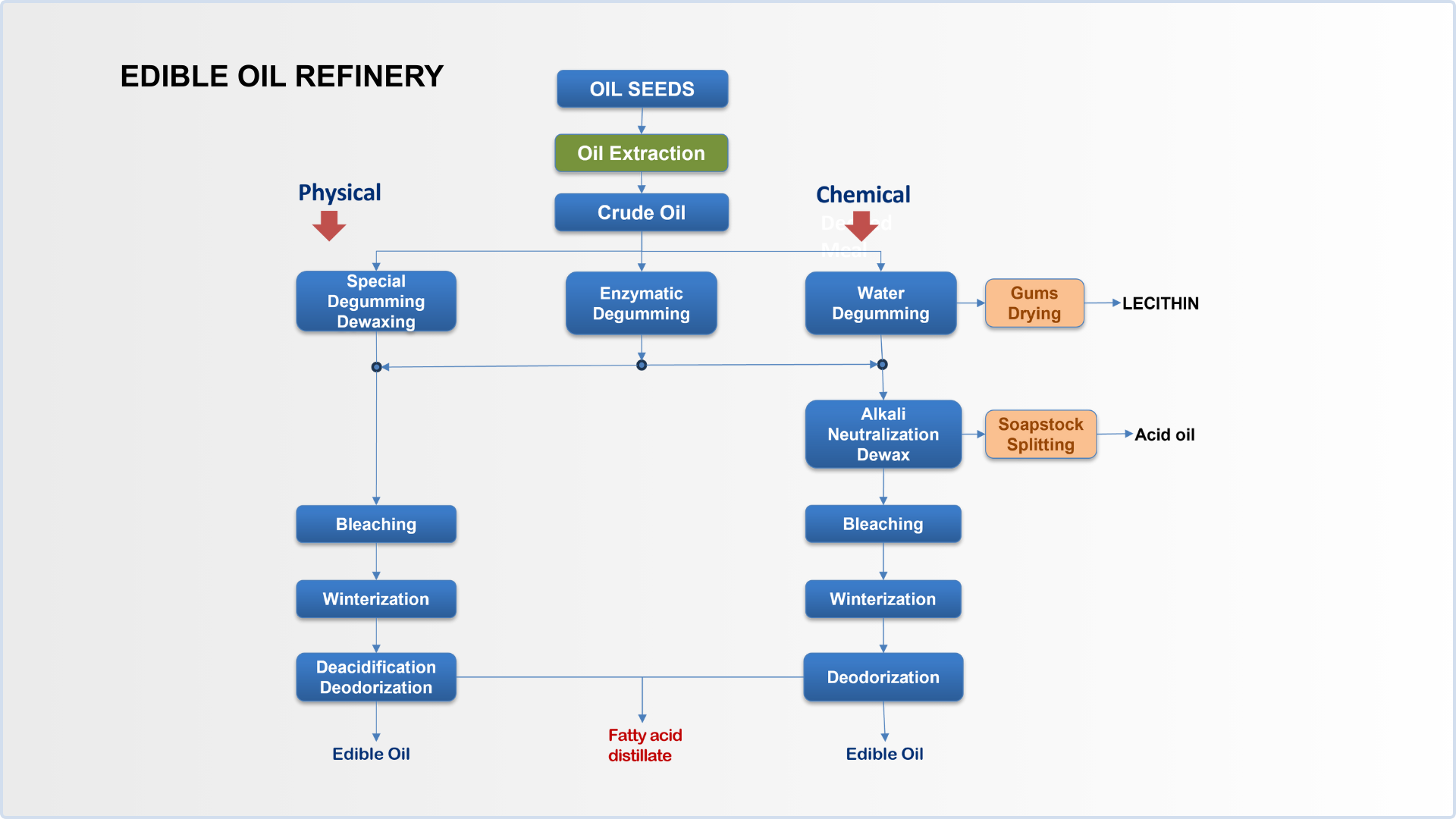
A. Degumming
Purpose: Remove phospholipids (gums), proteins, and mucilaginous substances
Methods:
- Water Degumming: For hydratable gums
- Acid Degumming: Using citric/phosphoric acid for non-hydratable gums
- Enzymatic Degumming: Using phospholipase enzymes
B. Neutralization (Alkali Refining/Deacidification)
Purpose: Remove free fatty acids (FFA)
Process: FFA + NaOH → Soapstock (removed by centrifugation)
Equipment: Mixers, centrifuges, washing columns
C. Bleaching
Purpose: Remove pigments (chlorophyll, carotenoids), oxidation products, trace metals
Process: Oil heated (90-110°C) and mixed with bleaching earth/clay (0.5-2%)
Equipment: Bleaching vessels, filters (plate & frame, pressure leaf filters)
D. Deodorization
Purpose: Remove volatile compounds (off-flavors, odor), final FFA removal
Key Conditions: High temperature (200-250°C), high vacuum (2-6 mbar)
Process: Steam stripping for 1-3 hours
Also accomplishes: Heat bleaching of carotenoids, destruction of pesticides/PAHs
Additional Optional Processes
- Winterization/Dewaxing: Chill oil to 5-10°C, hold, then filter to remove waxes (sunflower, rice bran oil) or saturated fats (palm oil fractionation)
- Fractionation:Separate oil into liquid (olein) and solid (stearin) fractions using controlled crystallization (for palm oil, coconut oil)
Performance data
Main advantages
- Improved Efficiency and Yield: Optimized degumming, neutralization, and dewaxing processes increase product yield, reducing oil loss.
- Enhanced Oil Quality: Systems consistently remove impurities, free fatty acids, and waxes, improving color, taste, and odor, while reducing GE and 3-MCPD levels.
- High-Performance Separation: Advanced centrifugal separators and self-cleaning equipment ensure continuous, reliable operation with reduced maintenance.
- Reduced Operational Costs: Optimized utility systems decrease consumption of energy, water, and steam.
- Versatility: Solutions are suitable for various crude oils (animal and vegetable) and offer flexible, automated, or modular configurations.
- Sustainability: Technologies like the help recover valuable nutrients (e.g., Vitamin E) that might otherwise be lost.
Related industries
Explore industries related to this category.