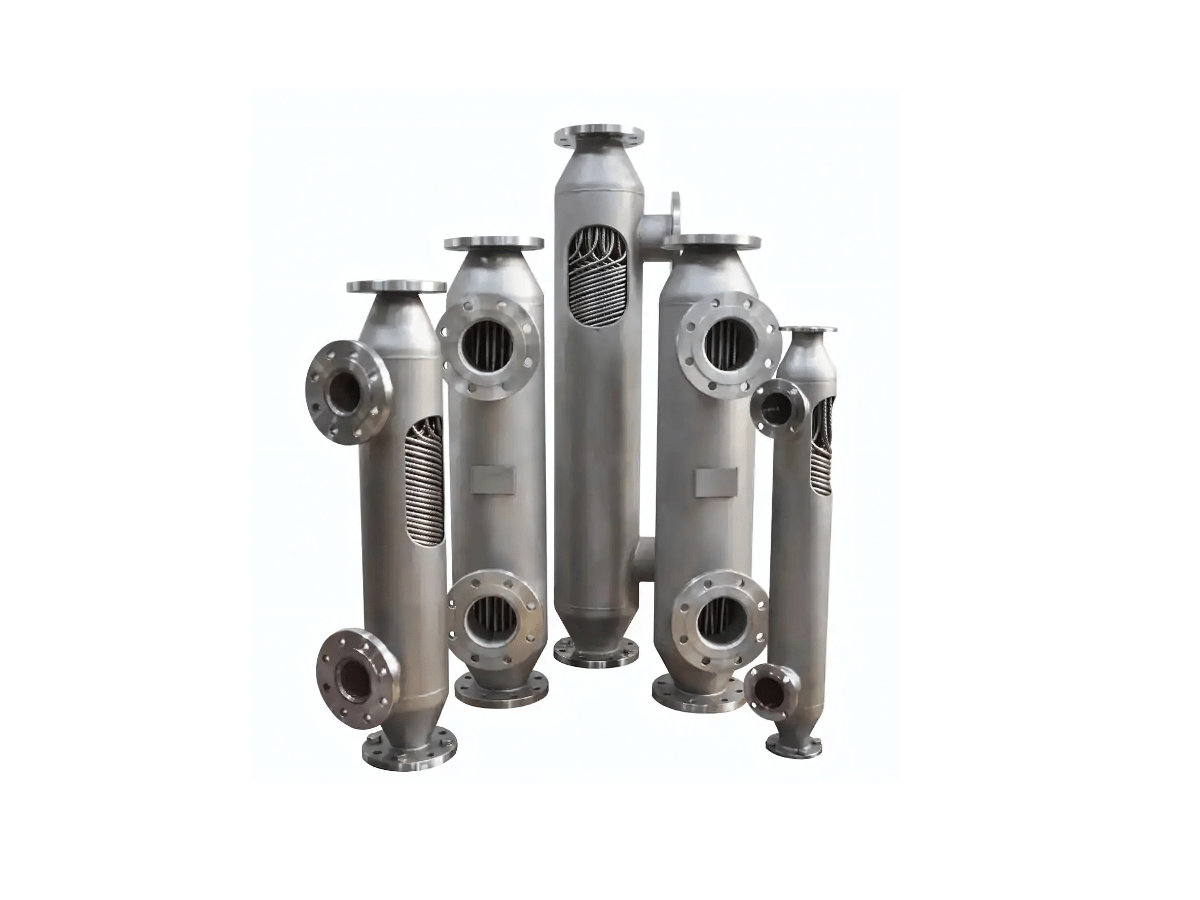
Coil Wound Heat exchanger
Design and working principle
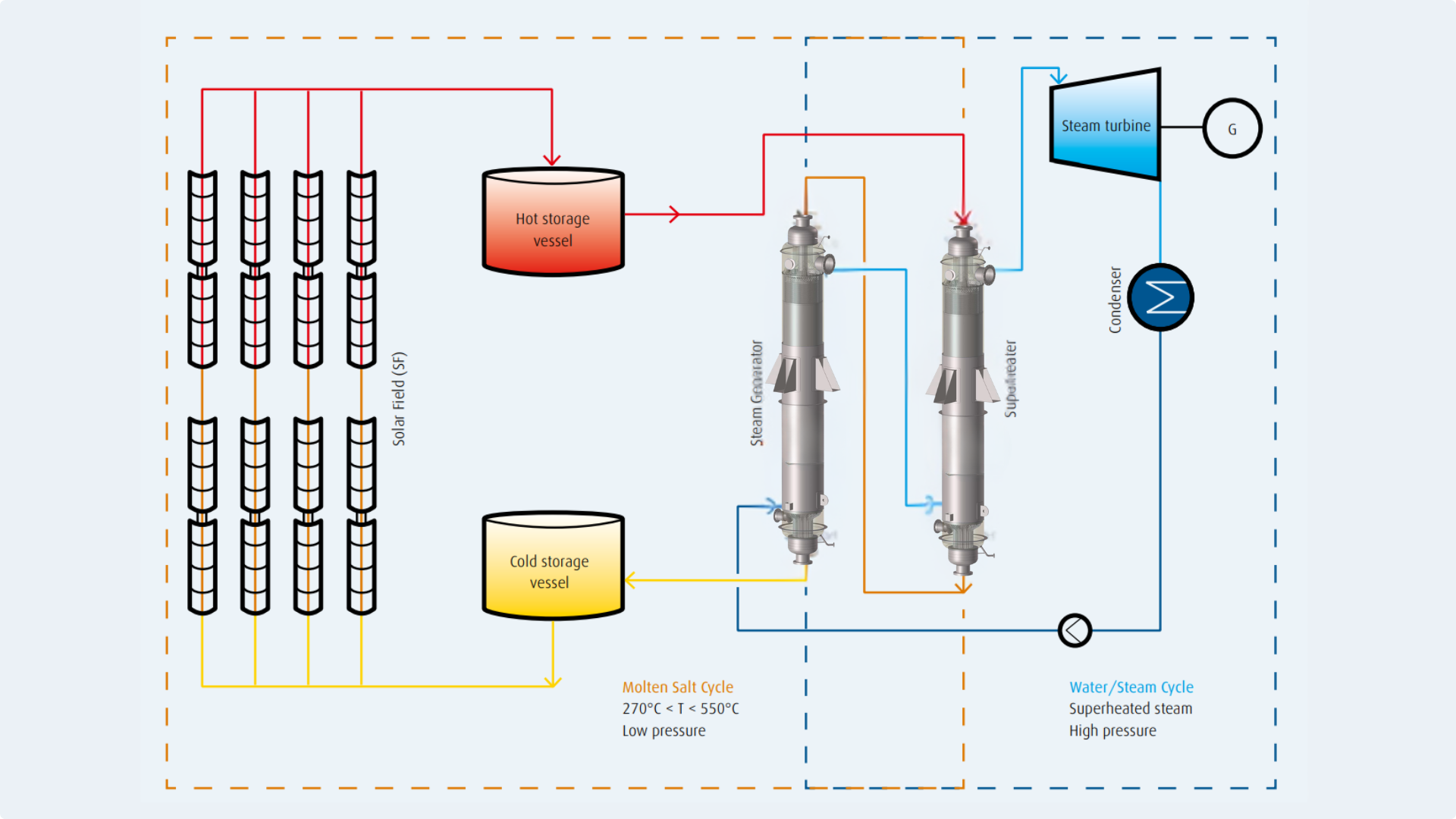
The molten salt heat exchanger is the core component in thermal energy storage (TES) plants. Here, the CWHE is typically operated consecutively in charge and discharge mode, with the result that it transfers excessive heat energy to the storage system on the one hand, and, on the other, discharges energy from the storage system back into the energy loop. The main characteristics of molten salt exchangers are high working temperatures, in some cases high pressure, wide load range variations during the day and quick startups. Our CWHEs are ideal for heat storage applications due to their high
mechanical flexibility, allowing very fast temperature changes in the media (typical of solar power plants).
Technical data
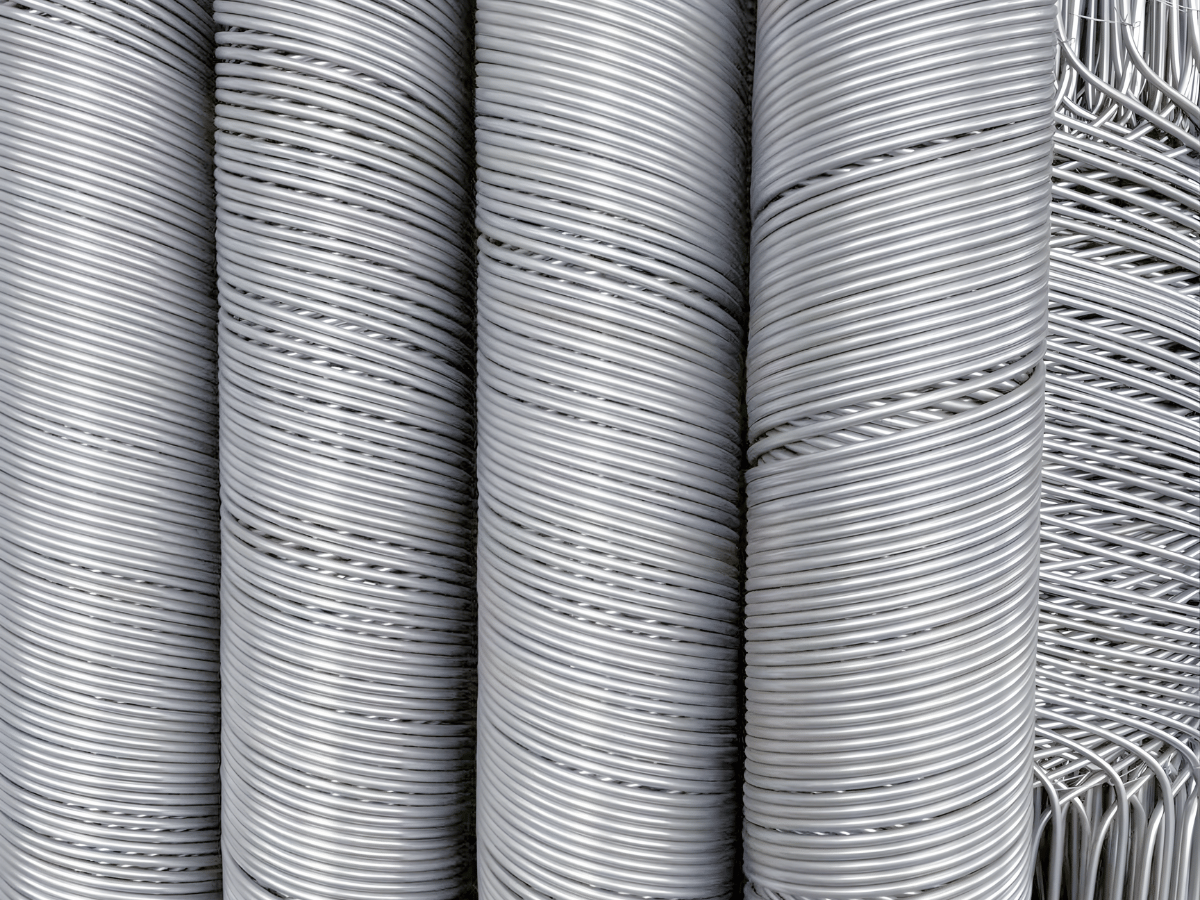
Spirally Wound Tube Bundles
A unique configuration in which heat exchange tubes are wound spirally, creating a long flow path that enhances turbulence and heat transfer.
High Pressure & Temperature Resistance
Designed for extreme process conditions, coil wound heat exchangers operate up to 1400 barg and 650°C, ensuring reliability and safety even under the most demanding duties.
Compact Footprint
Thanks to their vertical arrangement and high thermal performance, coil wound heat exchangers occupy only about one-tenth of the space required by conventional shell & tube exchangers.
Low Temperature Approach
The extended time of the fluid inside the spiral tubes enables a temperature approach as low as 5°C, optimizing energy recovery and process efficiency.
Specification
| Typical dimensions | |
| Vessel diameter: | up to 3.5 m |
| Vessel height: | up to 11 m |
| Heating surface: | up to 1,000 m² |
| Pressure: | up to 400 bar (g) tube side |
| Temperature: | from –269°C to approx. +150°C |
| Nominal capacity: | up to 150,000 Nm³/h |
Tubes materials | |
• Stainless steel | |
| • Carbon steel | |
| • Duplex and Superduplex | |
| • Special alloys (Inconel, Hastelloy, Monel) | |
| • Copper, Aluminium | |
| • Others upon request |
Applications
Related products
Explore products related to this product category.