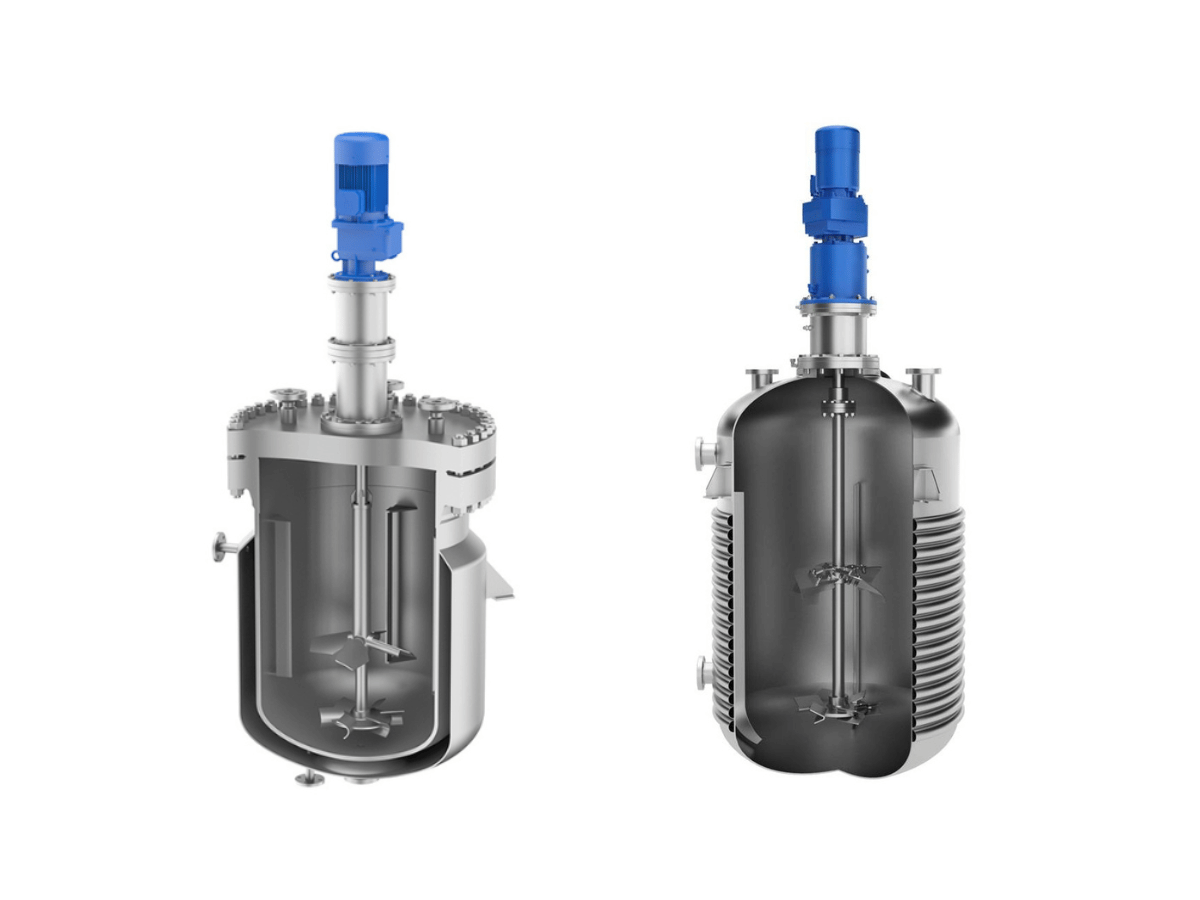
Hydrogenation Reactor
A hydrogenation unit is an industrial system designed to add hydrogen H2 to materials—typically unsaturated hydrocarbons or oils—in the presence of a catalyst to saturate bonds, increase stability, or alter physical properties (e.g., turning liquid oil into solid fat). These units, which include fixed-bed or stirred-tank reactors, are widely used in petrochemical refining (gasoline, aromatics) and chemical production (sorbitol, edible oils).
Technical data
Key Components and Processes
- Reactor System: Often fixed-bed for continuous flow (petrochemicals) or stirred tanks with specialized impellers (agitated gas-liquid reactors) to ensure high mass transfer of hydrogen into the liquid phase.
- Catalysts: Usually palladium (Pd) or nickel (Ni) based, selected based on the desired selectivity (e.g., removing diolefins without affecting aromatics).
- Operating Conditions: High-pressure and temperature, often requiring sophisticated, automated systems for precise control over hydrogenation levels.
- Separation: Downstream processing to remove the catalyst, often using filtration, followed by distillation or stabilization to isolate the final product.
Common Applications
- Refining/Petrochemicals: Selective hydrogenation of pyrolysis gasoline, saturation of aromatics, and total hydrogenation of streams to improve stability.
- Food Industry: Solidifying vegetable oils for margarine, shortening, and other fat products.
- Pharmaceuticals/Chemicals: Hydrogenation of sugar alcohols (sorbitol, xylitol).
Types of Units
- Selective Hydrogenation Unit (SHU): Targets specific compounds (like diolefins) while leaving others (like aromatics) untouched.
- Total Hydrogenation Unit: Used to achieve full saturation for maximum stability or to produce feedstocks for subsequent processing.
- Pilot/R&D Units: Modular, flexible skids used for testing, catalyst screening, and scaling up processes.
Related products
Explore products related to this product category.