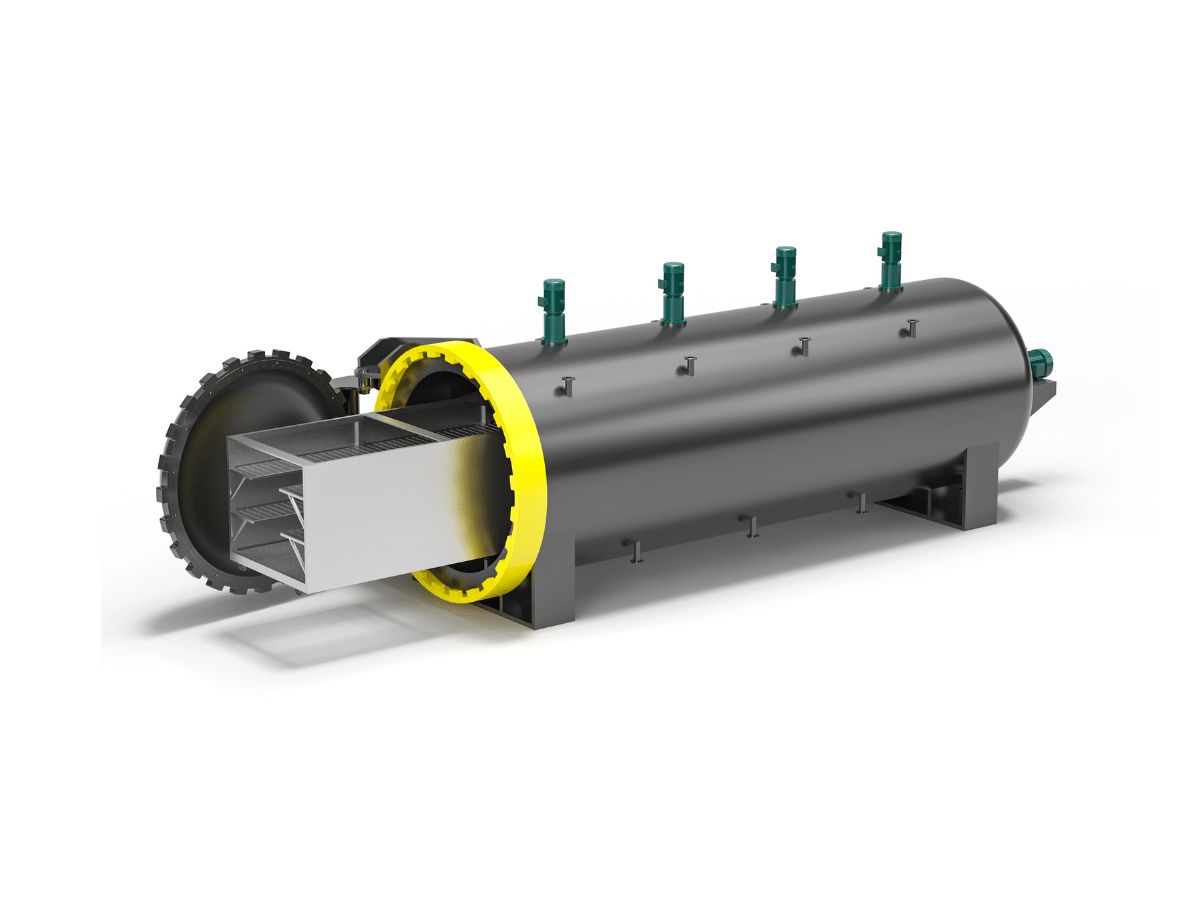
Laminar Autoclave
Laminar autoclaves for glass and fiber compounding are industrial-scale pressure vessels that use controlled heat and high pressure to bond layers of material into high-performance composites. These systems are essential for manufacturing bubble-free laminated safety glass and high-strength fiber-reinforced polymers like fiberglass or carbon fiber.
Gallery
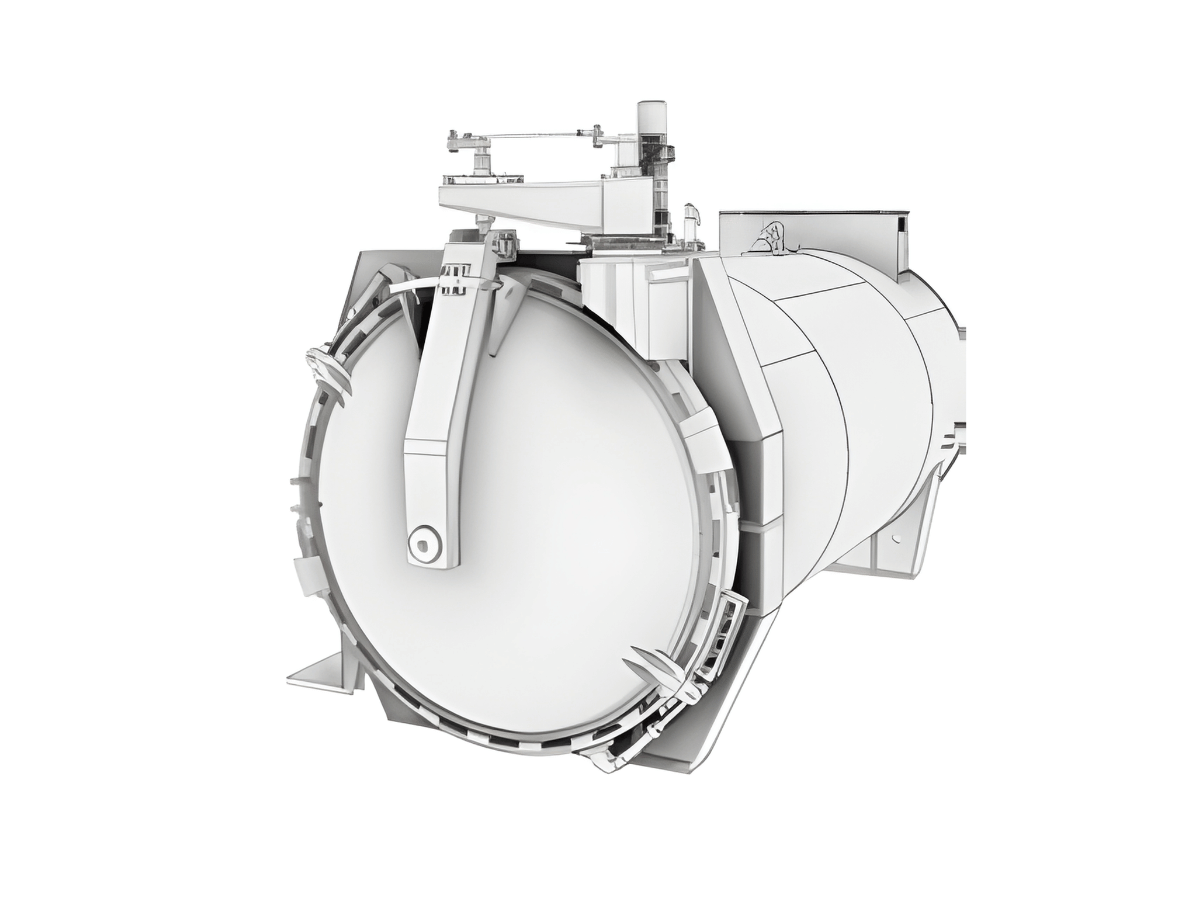
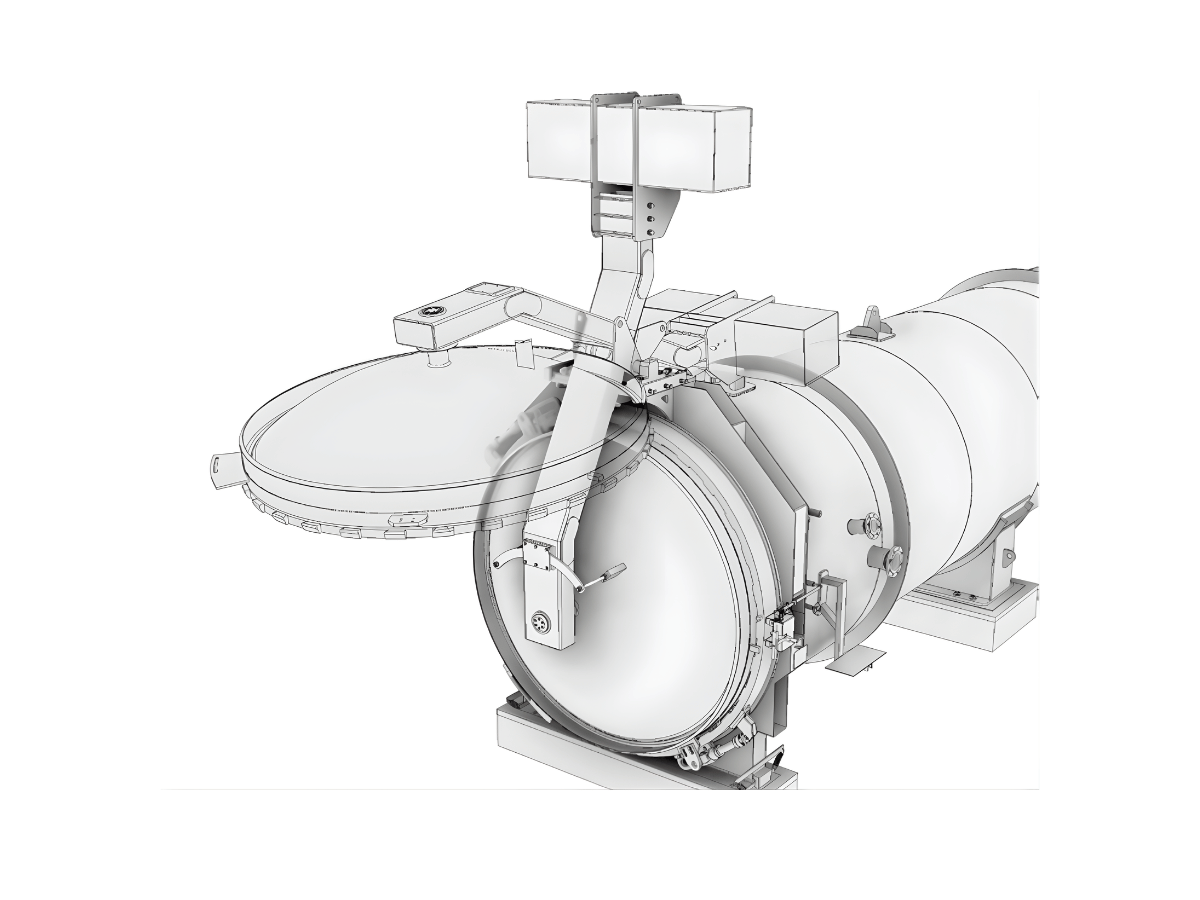
Technical data
Performance Characteristics
Laminar and composite autoclaves operate by combining mechanical pressure with precise thermal cycles to ensure uniform curing.
- High Pressure: Standard glass lamination typically requires 1.0 to 1.5 MPa (10–15 bar), while specialized composite systems for fiber compounding can reach up to 5.0 MPa (50 bar).
- Temperature Range: Systems for glass often operate between 120°C and 150°C to activate interlayers like PVB. Advanced composite curing for glass or carbon fiber can require temperatures up to 450°C.
- Uniform Airflow: Integrated forced convection systems maintain temperature uniformity (often within ±1–2°C) to prevent delamination or thermal stress.
Specialized Industrial Products
These systems are often custom-engineered based on the size of the glass or the specific fiber-resin matrix being compounded.
- Continuous Industrial Prepreg Oven Autoclave : A specialized system designed for both laminated glass and carbon/glass fiber composite curing. It features a PLC control system and handles pressures between 0.6 and 1.8 MPa.
- 3350X5000mm Electric Heating Glass Autoclave: Designed specifically for architectural glass, this model supports a maximum glass size of 3000x5000mm and a design pressure of 1.5 MPa.
- High-Pressure Composite Autoclave : A high-performance unit for fiber production capable of reaching 450°C and 5.0 MPa, making it suitable for compounding advanced fiber-reinforced materials.
- Econoclave: Widely used in aerospace and automotive industries
Manufacturing Applications
- Glass Lamination: Essential for producing bulletproof glazing, architectural safety glass, and automotive windshields. The autoclave removes air bubbles and ensures clear optical quality.
- Fiber Compounding: Used to cure pre-impregnated (prepreg) fiberglass or carbon fiber sheets. High pressure compacts the laminate layers, eliminating voids and achieving the optimal fiber-to-resin ratio.
- Advanced Curing: Combining vacuum bagging with autoclave pressure (vacuum-assisted curing) is a preferred method for complex or thick-section parts to prevent internal porosity.
Specification
| Model | Inner Diameter | Length | Heating System | Working Pressure | Max. Working Temperature |
| ACL230 | 2300mm | 3900mm | Electrical / Indirect Steam | 10 bar | ~200 ℃ |
| ACL231 | 2300mm | 4900mm | Electrical / Indirect Steam | 10 bar | ~200 ℃ |
| ACL310 | 3100mm | 4000mm | Direct / Indirect Steam | 10 bar | ~200 ℃ |
| ACL350 | 3500mm | 5000mm | Direct/ Indirect Steam | 10 bar | ~200 ℃ |
| ACL390 | 3900mm | 5500mm | Direct / Indirect Steam | 10 bar | ~200 ℃ |
| ACL460 | 4600mm | 3500mm | Direct / Indirect Steam | 10 bar | ~200 ℃ |
Related products
Explore products related to this product category.